Without surgery, cortisone shots, or months of downtime.
Plantar fasciitis or heel pain can make everyday movement, work, training, and sleep harder than it should be. At Muscle Restoration Therapy in Fort Collins, care focuses on identifying what may be driving symptoms – from muscle tension and joint irritation to nerve sensitivity or old injuries – then building a non-invasive plan around comfort, mobility, and function.
If you’ve tried stretching, orthotics, and injections and your heel pain keeps coming back — there’s a reason it hasn’t worked. SoftWave therapy at Muscle Restoration Therapy treats the root cause.
Plantar fasciitis relief usually requires more than stretching the sore spot. MRT looks at heel pain, calf tightness, foot loading, walking patterns, and tissue irritation so plantar fasciitis treatment can be more targeted.
The plantar fascia — the band of connective tissue running from your heel to your toes — has almost no blood flow. When it gets inflamed, your body can’t deliver the oxygen and nutrients it needs to actually heal. The inflammation cools down, you feel better, you go back to normal activity, and it flares right back up.
Most treatments manage that cycle. They don’t break it. That’s why so many people spend months — sometimes years — rotating through the same options with the same result:
- ✗ Orthotics — helps while you’re wearing them, does nothing overnight or barefoot
- ✗ Stretching — useful for mild cases, not enough for chronic plantar fasciitis
- ✗ Cortisone shots — temporary relief that can actually weaken the fascia over time
- ✗ Ice and rest — reduces inflammation temporarily, doesn’t repair anything
- ✗ Surgery — invasive, high-risk, and doesn’t always work
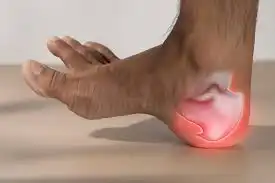
A care plan may include foot pain relief, SoftWave therapy, or pain management services when those options fit the evaluation. MRT uses each option to support comfort, mobility, and function without turning every symptom into the same treatment path.
SoftWave uses FDA-cleared acoustic wave technology to trigger your body’s own healing response — specifically in tissue that doesn’t heal well on its own. It’s not pain management. It’s tissue repair.
The SoftWave applicator delivers acoustic waves through the skin directly into the plantar fascia. No needles, no incisions, no anesthesia.
The acoustic stimulus signals your body to grow new blood vessels in the area — a process called angiogenesis. This directly addresses the poor circulation that prevents the plantar fascia from healing on its own.
With improved blood flow, oxygen delivery, and stem cell recruitment, the damaged fascia can genuinely regenerate — not just go quiet for a few weeks before flaring again.
Extracorporeal shockwave therapy for plantar fasciitis has been studied in multiple randomized controlled trials. Research published in the American Journal of Sports Medicine found significant improvements in pain and functional outcomes compared to placebo — with results continuing to improve after treatment ended. SoftWave is FDA cleared for musculoskeletal conditions.
High mileage, hard surfaces, and repetitive impact are a perfect storm for plantar fasciitis. The plantar fascia absorbs shock with every stride — and when it takes thousands of impacts a day without adequate recovery time, micro-tears accumulate faster than they can heal. Fort Collins has a serious running and hiking community, and this is one of the most common conditions we see in active people pushing their mileage.
Nurses, teachers, retail workers, tradespeople — anyone spending 8+ hours on hard floors. The problem here isn’t intensity, it’s continuous compression. Prolonged standing cuts off the already-minimal blood supply to the plantar fascia. By end of shift it’s inflamed. By morning it’s stiff. Repeat indefinitely.
Tissue heals more slowly with age, and the natural fat pad in the heel thins out — reducing built-in shock absorption. The same activity level that felt fine at 30 starts creating problems at 45 or 55. It’s not weakness. It’s biology. And it’s why passive treatments stop cutting it and something that actively stimulates healing becomes necessary.
Both extremes put abnormal strain on the plantar fascia. High arches concentrate load in the heel and ball. Flat feet cause the arch to collapse with each step, overstretching the fascia repeatedly. Either way, the tissue is being worked harder than it’s built for.
Our SoftWave protocol maps both the foot and the calf. We treat the plantar fascia directly and the referral areas in the lower leg that are feeding the problem. It’s a more complete approach — and it’s why patients who’ve tried everything else start seeing real results here.
One of the most overlooked factors in plantar fasciitis is what’s happening above the foot. The calf muscles — the gastrocnemius and soleus — connect to the heel via the Achilles tendon. When those muscles are chronically tight or inflamed, they pull on the heel constantly, adding stress to the plantar fascia even when you’re completely off your feet.
This is called a referral pattern. It’s why some people stretch their foot religiously and still wake up with the same pain every morning. They’re treating the symptom while the tension driving it is coming from higher up the chain.
| Treatment | Treats Root Cause | Lasting Relief | No Downtime | No Surgery or Needles |
|---|---|---|---|---|
| Rest & Ice | ✗ No | ✗ No | ✓ Yes | ✓ Yes |
| Stretching | ✗ No | ~ Sometimes | ✓ Yes | ✓ Yes |
| Custom Orthotics | ✗ No | ~ Only while worn | ✓ Yes | ✓ Yes |
| Cortisone Shots | ✗ No | ✗ No | ✓ Yes | ✗ Needles |
| Surgery | ✓ Yes | ~ Variable | ✗ Months recovery | ✗ Surgery |
| SoftWave Therapy MRT | ✓ Yes | ✓ Yes | ✓ Yes | ✓ Yes |
Your first visit starts with a thorough look at your foot and history — how long you’ve had it, what you’ve tried, and where the problem is actually coming from. We map the treatment area and run your first SoftWave session. You walk out the same way you walked in — no restrictions, no recovery time.
Each session is roughly 15 minutes long. We deliver 1,000–1,500 pulses per session and treat whatever we identified as the root cause at your first visit — not just the bottom of your foot. Most patients start seeing meaningful improvement by sessions 3 or 4. Results continue building for weeks after your final session. Every case is different — 12 sessions is our standard protocol but some patients need more to get where they want to be.
You’re a strong candidate if you’ve had plantar fasciitis for more than 3 months, conservative treatments haven’t worked, you want to avoid surgery, or you need to stay active during treatment. Not sure if it’s right for you? Call us at (970) 449-9757 and we’ll tell you honestly before you spend anything.
Fort Collins is an active city. People here run Horsetooth, hike Lory State Park, bike the Poudre Trail, and spend weekends in the mountains. When plantar fasciitis hits, the options have historically been: see a podiatrist, get orthotics, get a shot, and hope. That cycle doesn’t work for most people. MRT is at 4532 McMurry Ave, Suite 204 in Fort Collins. You’ll work with the same team from your first session to your last — people who know your case and track your progress. We serve Fort Collins and surrounding Northern Colorado including Loveland, Windsor, Wellington, and Timnath.
Our SoftWave protocol is condition-specific and includes calf referral zone treatment that most providers skip entirely. You’ll see the same therapists every visit — not a rotating staff at a franchise. There’s no downtime, no recovery restrictions, and no time off work or training. We monitor your pain levels every session and adjust based on how your body responds. If you’re not sure whether we can help, call us at (970) 449-9757 and we’ll tell you straight.
Most patients describe mild pressure or a buzzing sensation. It’s not comfortable the way a massage is, but it’s very manageable. Many people report reduced pain immediately after the session.
Some patients notice relief after their first session. Significant improvement typically shows up by sessions 3–4. The healing process continues for weeks after your final treatment.
Cortisone reduces inflammation temporarily but doesn’t repair tissue — and repeated injections can weaken the plantar fascia. SoftWave stimulates your body to regenerate the tissue itself.
No. Chronic cases often respond very well because the blood flow deficit driving the problem is still there to address.
Most patients continue normal activity throughout treatment. We’ll give you guidance based on your specific situation.
Yes. We have financing options for the 8-session package. Ask about it when you call — (970) 449-9757.
Most clinics use 500 pulses per session. Research on extracorporeal shockwave therapy for plantar fasciitis shows that higher pulse counts produce stronger tissue regeneration responses. We start at 1,000 pulses — up to 1,500 — because the evidence supports it and our patients deserve the full protocol, not a shortened version. Same price, more treatment.
The best starting point is an evaluation. MRT reviews your symptoms, history, movement, and goals so care is based on your body rather than a one-size-fits-all plan.
The number of visits varies by condition, severity, goals, and how your body responds. MRT will help you understand what progress should look like after the first evaluation.
Patient reviews can show how people describe the team, communication, appointment experience, and support they received. Results vary by person, but the feedback can help visitors understand what care at Muscle Restoration Therapy feels like.
More than 90 five-star reviews on Google.
Trustindex verifies that the original source of the review is Google. I trashed my back playing golf and was literally crippled for 2 weeks when a friend recommended Mark at MRT. Although skeptical I knew the normal choices, doctor, PT or chiropractor would not solve the problem so I made an appointment and met with Mark. Within 3 weeks I was out of pain and after 6 weeks the problem was solved. My issue was severe so it took some time to get over it. I’m glad I went and you will be too. I highly recommend MRT for chronic pain.Trustindex verifies that the original source of the review is Google. I've had several sessions with Mark and have already seen a significant improvement in my pain management. I feel like I'm on the path to recovery! I really appreciate his depth of knowledge and taking time to explain things. And, everyone at the office is so friendly and helpful!Trustindex verifies that the original source of the review is Google. I absolutely recommend Mark Rise at Muscle Restoration Therapy! I love running but hadn’t been able to run for over 10 months. After getting an MRI, I was told I might have a joint disease, which was discouraging. I went to see Mark ONE time, and after evaluating my knee and body, he gave me specific exercises using a power massager. I started them right away, and within 2 weeks I was able to complete my first 3-mile run completely pain-free. Now I’m back to running 4–5 days a week! I’ve continued doing the exercises Mark gave me, along with red light therapy at MRT twice a week, and my progress has been incredible. I can’t thank Mark enough for helping me get back to something I love. Highly recommend!Trustindex verifies that the original source of the review is Google. Mark and the team at Muscle Restoration are excellent! I came in with back pain that was difficult to diagnose, and Mark was patient and took the time to understand the root problem. He worked to get my back feeling better, not only through skilled care, but also by educating me. He helps you learn how to address back problems at home so that you stay healthy in the long run. So grateful for his care and expertise! I have already recommended Mark to several other people!Trustindex verifies that the original source of the review is Google. I had what I called “leg-butt” and Mark tested me, advised me in what I need to do and it took care of the pain. Now what I need to do is a part of my daily routine and have remained pain free. I so appreciate Mark and the help he has given me. Thanks!Trustindex verifies that the original source of the review is Google. Working with Mark, Craig, and Jonah has been a great experience for me. They have helped me to feel better and be at my best. I have less pain and improved flexibity. Bonus, I sleep better as well. Give them a try you will enjoy the results! I have been taking Algae Cal Plus & Strontium Boost for 6 months my doctor was impressed with my big improvement. I hope more people will try these products, they work! JRGTrustindex verifies that the original source of the review is Google. Mark is a genius I say! By far the best I’ve ever had. Really knows his stuff ! Fixed me physically and mentally as far as my back is concerned! Had good advice and the only one that wanted to watch me load and unload my equipment. Gave me an exercise routine that I do in a chair that you wouldn’t even know I’m doing for the most part. Others only told me to get new job!Trustindex verifies that the original source of the review is Google. The team at MRT are fantastic. From the day you start with them you can immediately see & feel their passion to help you get better. They talk you through everything they are doing & empower you to do your homework and see the results. When my back proved to be more stubborn than initially diagnosed they added in the SoftWave therapy and that was an awesome decision! Several areas in my back began to respond so quickly to this treatment. This is a committed group of health professionals!Trustindex verifies that the original source of the review is Google. At 14 years old, I was struggling with Osgood-Schlatter disease and thought I’d be stuck wearing orthotics for the rest of my life. That’s when I met Mark from Muscle Restoration, and he completely changed my perspective on healing. His techniques didn’t just mask the pain—they actually fixed the problem. I was blown away. Nearly a decade later, I came back to Mark with a shoulder injury, and once again, he worked his magic. His expertise is unmatched, and his dedication to truly helping people is even more impressive. Amazing service, even better man. Recommended 11/10 Ps. The new office is amazing!
Don’t let Plantar Fasciits hold you back from work, hobbies, or sleep. Let’s create a plan that gets you moving again—safely and naturally.
Feel your best with Muscle Restoration Therapy.
We identify and treat the root causes of pain so you can move easier, recover faster, and get back to what you love. Book a session today and experience the difference.