
Sciatica symptoms can make everyday movement, work, training, and sleep harder than it should be. At Muscle Restoration Therapy in Fort Collins, care focuses on identifying what may be driving symptoms – from muscle tension and joint irritation to nerve sensitivity or old injuries – then building a non-invasive plan around comfort, mobility, and function.
Sciatica relief starts with finding why the nerve is irritated. MRT looks at the low back, hips, muscle tension, movement limits, and daily triggers so care can target the pattern behind the symptoms.
Sciatica relief starts with finding why the nerve is irritated. MRT looks at the low back, hips, muscle tension, movement limits, and daily triggers so care can target the pattern behind the symptoms.
Our manual therapy approach identifies and corrects the muscular imbalances — in the hips, glutes, piriformis, and lumbar stabilizers — that are compressing the sciatic nerve or causing it to be irritated with every step. Treating the nerve without restoring muscle function is like patching a tire without pulling out the nail.
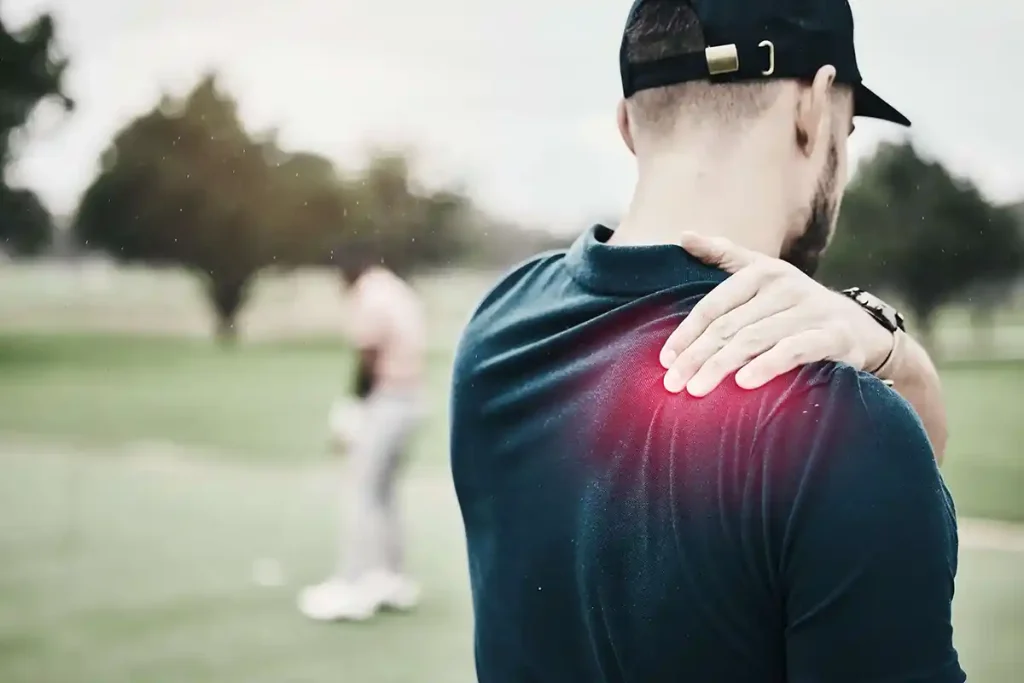
A care plan may include pain management services, muscle restoration therapy, or non-invasive pain management when those options fit the evaluation. MRT uses each option to support comfort, mobility, and function without turning every symptom into the same treatment path.
If you’ve been dealing with that shooting pain down your leg — the kind that makes sitting through a workday feel impossible or turns putting on your shoes into an ordeal — you’re not alone.
Sciatica is one of the most common pain conditions we treat at Muscle Restoration Therapy in Fort Collins. And it’s one of the most misunderstood. Most people get treated for where the pain shows up — the nerve, the lower back — without anyone identifying what’s actually driving the compression.
At MRT, we find the source. Then we fix it.
We specialize in treating:
At Muscle Restoration Therapy, we use a combination of non-invasive treatments designed to address both the nerve compression and the underlying muscular causes driving it. No surgery, no injections, no guessing.
Muscle Restoration Therapy (MRT) focuses on identifying and correcting muscular dysfunction that contributes to shoulder pain, restricted movement, and joint stress. By restoring proper muscle balance and movement patterns, MRT helps reduce strain on the shoulder joint and supports long-term pain relief and recovery.
True shockwave technology that stimulates healing along the nerve path, reduces inflammation in compressed disc tissue, and promotes regeneration. Many patients notice meaningful pain reduction within the first few sessions. SoftWave reaches deep enough to affect the structures actually compressing the nerve — not just the surface.
Class IV laser penetrates deep into disc and nerve root tissue to accelerate healing and reduce inflammation at the cellular level. Especially effective when inflammation is the primary driver of nerve compression — it calms the nerve without masking the pain.
PEMF enhances cellular recovery throughout the treatment process. For sciatica patients — especially those with chronic, long-standing nerve compression — PEMF helps reduce inflammation, improve circulation in compressed tissue, and support the body’s natural repair mechanisms.
For disc-driven sciatica, spinal decompression creates a controlled negative pressure in the lumbar spine — drawing herniated disc material back toward center and relieving direct pressure on the nerve root. We use decompression as part of a coordinated plan, not a standalone treatment, because disc problems don’t exist in isolation.
It’s easy to push through sciatica — ice it, stretch it, hope it resolves. Sometimes it does. But there are signs it’s time to get a proper evaluation:
The longer nerve compression continues without treatment, the more complex the recovery becomes. Early intervention produces better outcomes.
“I had dealt with sciatica for over two years. I’d tried chiropractic, PT, and injections. Nothing stuck. MRT was the first place that actually looked at why it kept coming back — not just treated the nerve. Three months later I’m back to hiking and I haven’t had a flare since.”
— Fort Collins Patient via Google Review
Trustindex verifies that the original source of the review is Google. I trashed my back playing golf and was literally crippled for 2 weeks when a friend recommended Mark at MRT. Although skeptical I knew the normal choices, doctor, PT or chiropractor would not solve the problem so I made an appointment and met with Mark. Within 3 weeks I was out of pain and after 6 weeks the problem was solved. My issue was severe so it took some time to get over it. I’m glad I went and you will be too. I highly recommend MRT for chronic pain.Trustindex verifies that the original source of the review is Google. I've had several sessions with Mark and have already seen a significant improvement in my pain management. I feel like I'm on the path to recovery! I really appreciate his depth of knowledge and taking time to explain things. And, everyone at the office is so friendly and helpful!Trustindex verifies that the original source of the review is Google. I absolutely recommend Mark Rise at Muscle Restoration Therapy! I love running but hadn’t been able to run for over 10 months. After getting an MRI, I was told I might have a joint disease, which was discouraging. I went to see Mark ONE time, and after evaluating my knee and body, he gave me specific exercises using a power massager. I started them right away, and within 2 weeks I was able to complete my first 3-mile run completely pain-free. Now I’m back to running 4–5 days a week! I’ve continued doing the exercises Mark gave me, along with red light therapy at MRT twice a week, and my progress has been incredible. I can’t thank Mark enough for helping me get back to something I love. Highly recommend!Trustindex verifies that the original source of the review is Google. Mark and the team at Muscle Restoration are excellent! I came in with back pain that was difficult to diagnose, and Mark was patient and took the time to understand the root problem. He worked to get my back feeling better, not only through skilled care, but also by educating me. He helps you learn how to address back problems at home so that you stay healthy in the long run. So grateful for his care and expertise! I have already recommended Mark to several other people!Trustindex verifies that the original source of the review is Google. I had what I called “leg-butt” and Mark tested me, advised me in what I need to do and it took care of the pain. Now what I need to do is a part of my daily routine and have remained pain free. I so appreciate Mark and the help he has given me. Thanks!Trustindex verifies that the original source of the review is Google. Working with Mark, Craig, and Jonah has been a great experience for me. They have helped me to feel better and be at my best. I have less pain and improved flexibity. Bonus, I sleep better as well. Give them a try you will enjoy the results! I have been taking Algae Cal Plus & Strontium Boost for 6 months my doctor was impressed with my big improvement. I hope more people will try these products, they work! JRGTrustindex verifies that the original source of the review is Google. Mark is a genius I say! By far the best I’ve ever had. Really knows his stuff ! Fixed me physically and mentally as far as my back is concerned! Had good advice and the only one that wanted to watch me load and unload my equipment. Gave me an exercise routine that I do in a chair that you wouldn’t even know I’m doing for the most part. Others only told me to get new job!Trustindex verifies that the original source of the review is Google. The team at MRT are fantastic. From the day you start with them you can immediately see & feel their passion to help you get better. They talk you through everything they are doing & empower you to do your homework and see the results. When my back proved to be more stubborn than initially diagnosed they added in the SoftWave therapy and that was an awesome decision! Several areas in my back began to respond so quickly to this treatment. This is a committed group of health professionals!Trustindex verifies that the original source of the review is Google. At 14 years old, I was struggling with Osgood-Schlatter disease and thought I’d be stuck wearing orthotics for the rest of my life. That’s when I met Mark from Muscle Restoration, and he completely changed my perspective on healing. His techniques didn’t just mask the pain—they actually fixed the problem. I was blown away. Nearly a decade later, I came back to Mark with a shoulder injury, and once again, he worked his magic. His expertise is unmatched, and his dedication to truly helping people is even more impressive. Amazing service, even better man. Recommended 11/10 Ps. The new office is amazing!
The best starting point is an evaluation. MRT reviews your symptoms, history, movement, and goals so care is based on your body rather than a one-size-fits-all plan.
The first visit focuses on where symptoms show up, what aggravates them, and which non-invasive options may be appropriate. The team will explain the likely starting plan before care begins.
The number of visits varies by condition, severity, goals, and how your body responds. MRT will help you understand what progress should look like after the first evaluation.
Feel your best with Muscle Restoration Therapy.
Book a session today and experience the difference. Not sure if we treat your specific issue? Browse our conditions page or reach out below.

Fill out this quick form and we’ll get back to you within 24 hours (next business day on weekends)